Circuit Breaker Repair
Breakers that trip, buzz, run hot, or refuse to reset get diagnosed and repaired for Sebastian homes and businesses.
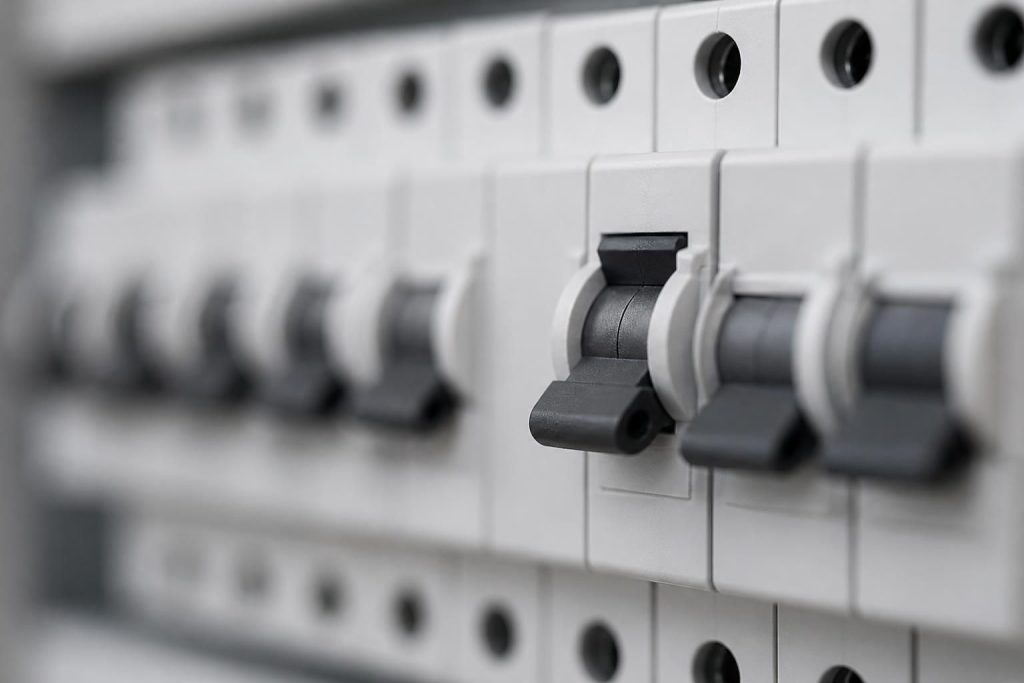
Controlled Power & Lighting Inc. handles circuit breaker repair in Sebastian, FL for homeowners and businesses whose breakers keep tripping, won't reset, feel hot, or buzz inside the panel. We find out whether the breaker, the wiring, or the load on the circuit is causing the trouble, then repair or replace what is actually failing. To get started, call or send a request describing which circuits are affected and what you have noticed.
Maybe the kitchen breaker snaps off every time the microwave and coffee maker run together. Maybe the air conditioner trips a breaker on the hottest afternoons, or one breaker handle feels loose and never quite stays on. Resetting it over and over only hides the problem. A breaker is a safety device, and when it misbehaves, something in the circuit is usually telling you it needs attention.
Breaker Warning Signs
Not every tripped breaker means the breaker itself is bad. Still, a few patterns point toward a repair visit rather than another reset.
Breaker Keeps Tripping
A breaker that trips once during a storm is one thing. A breaker that trips weekly, or within minutes of turning on the same appliance, means the circuit is overloaded, a connection is failing, or the breaker has weakened and no longer holds its rating the way it should.
Breaker Won't Reset
If the handle snaps back to off right away, or feels mushy and never clicks into place, there may be a short, a ground fault, or a worn internal mechanism. Forcing it is a bad idea. Leave it off and have it checked.
Other signs worth acting on:
- A burning or hot plastic smell near the electrical panel
- Buzzing, humming, or crackling from the panel
- Scorch marks, discoloration, or melted plastic on a breaker or its neighbors
- A breaker that feels warm or hot to the touch
- Lights that flicker or dim on one circuit, or outlets that lose power with no tripped breaker in sight
- A breaker handle that sits loose or sits between on and off
Common Causes
Tracing the cause is the real work in breaker repair. These are the usual suspects, roughly in the order they get checked.
- Overloaded circuit. Too many devices on one line, such as space heaters, window units, or kitchen appliances, draw more current than the circuit is built to carry. The breaker trips to protect the wiring.
- Worn or weak breaker. Breakers age. Repeated tripping and heat cycling can leave one that trips too easily or fails to trip when it should.
- Loose connections. A wire that has worked loose at the breaker or the bus creates heat, which can cause burn marks, buzzing, and nuisance trips.
- Short circuit or ground fault. Damaged insulation, a failing appliance, or moisture in a box or fixture can send current where it should not go and trip the breaker instantly.
- Moisture and corrosion. Coastal Florida is humid, and homes near the Indian River Lagoon or the ocean often deal with salty air. Over time that can corrode outdoor disconnects, exterior boxes, and connections in garages and utility areas.
- Heavy summer loads. Most Sebastian homes lean hard on air conditioning for much of the year, and an older or marginal breaker may start tripping once the AC runs for long stretches.
What Repair Covers
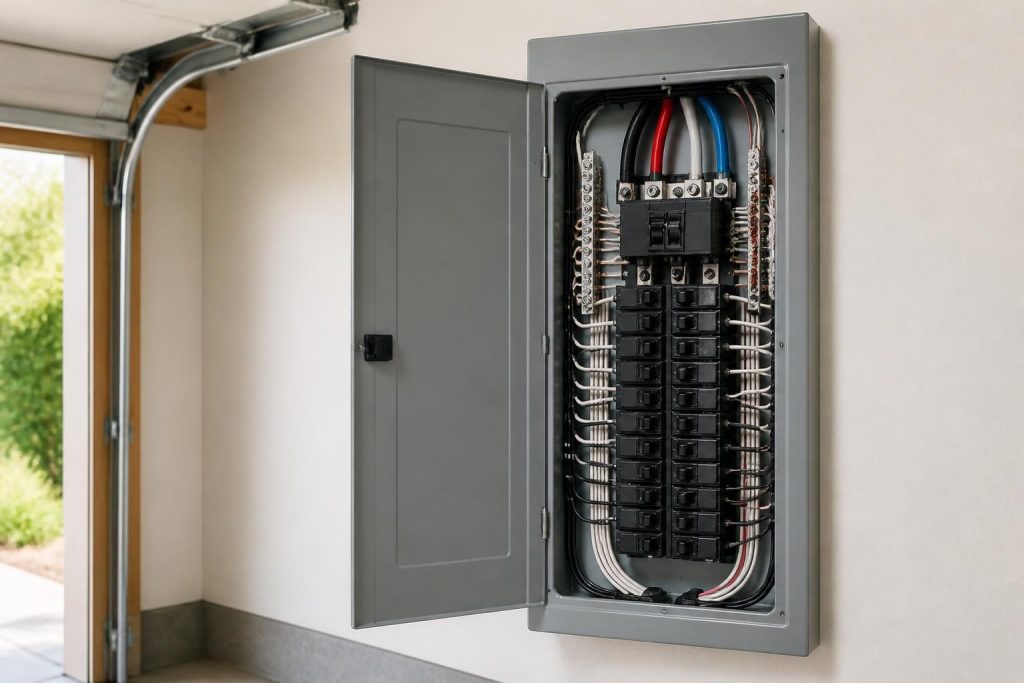
Circuit breaker repair is a diagnostic job first and a parts job second. Depending on what we find, a visit can include:
- Testing the affected circuit to see what load it carries and where the fault sits
- Inspecting the breaker, its connection to the panel, and the wiring leaving it
- Replacing a worn, damaged, or overheated breaker with the correct type and rating for that circuit
- Tightening or repairing loose connections and addressing heat damage at the connection point
- Moving or redistributing loads when a circuit is overloaded, including adding a dedicated circuit for a heavy appliance
- Tracing a fault out along the circuit to an outlet, fixture, or appliance connection
Each breaker has to match the panel it sits in and the wire it protects. Swapping in a lookalike that fits the slot but does not suit the circuit is a common shortcut that causes problems later.
Repair or Panel Upgrade
Homeowners often wonder whether a bad breaker means the whole panel needs to go. Usually it does not. A single failed breaker on an otherwise sound panel is a repair. That is what this page covers.
Panel replacement or a service upgrade becomes the better conversation when the panel itself shows damage, when it has no room left for the circuits you need, or when several breakers are failing at once. Adding an EV charger, a generator connection, or a large new appliance can also push an older panel past its limits. Panel upgrades are a separate service from breaker repair, and if your visit points that way, we will explain why and let you decide.
How Visits Work
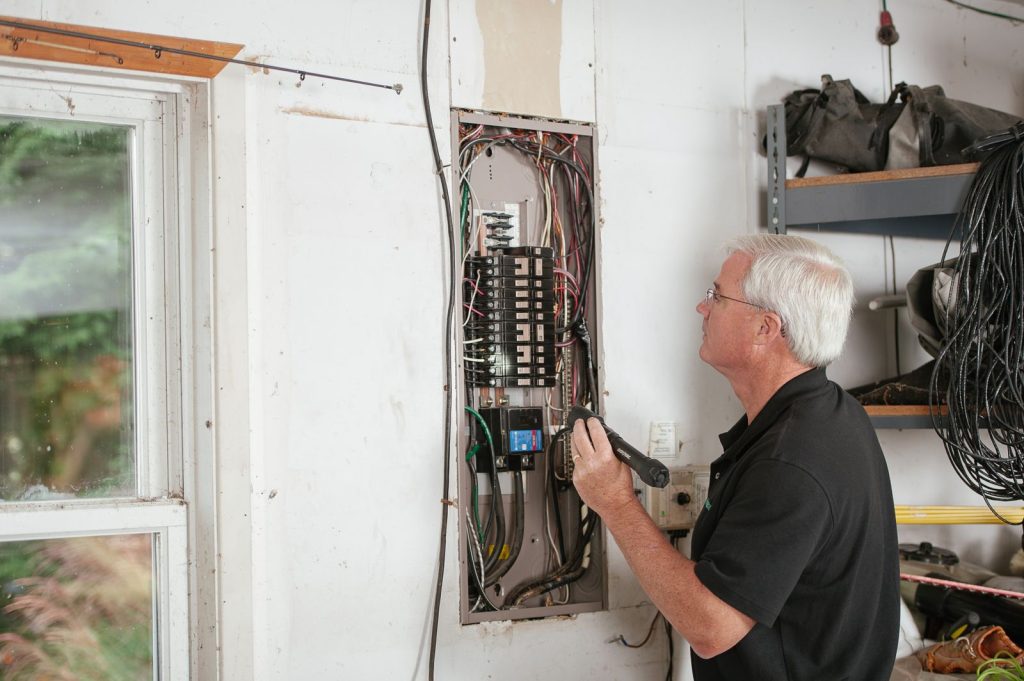
A breaker repair call typically follows a simple order. You describe what has been happening: which breaker, which rooms or equipment, and when it trips. The electrician then looks at the panel, checks the breaker and its connections, and tests the circuit. Findings come before any parts are swapped, so you know whether the fix is a new breaker, a tightened connection, or something farther down the line.
It helps to note a few details before the visit:
- What was running when the breaker tripped
- Whether it trips instantly or after a while
- Whether the weather, such as rain or a hot afternoon, seems to matter
- Any recent additions, like new appliances or a window unit
We serve Sebastian and nearby communities including Vero Beach, Fellsmere, Wabasso, Micco, Grant-Valkaria, Indian River Shores, Melbourne Beach, and Palm Bay, so mention your location when you reach out.
What Good Work Looks Like
Whoever you hire, these are reasonable standards to hold the work to:
- Diagnosis before parts. A breaker that keeps tripping should not just be swapped on a guess. The cause should be identified, or at least narrowed down and explained.
- Correct match. The replacement should be the right type and amperage for the panel and the wire size on that circuit.
- Solid connections. Terminals should be tight and clean, and any heat-damaged wire or hardware should be addressed instead of covered up.
- Clear labeling. After the work, your panel directory should make sense, and you should know which circuits were touched.
- Plain explanation. You should hear what was found, what was done, and what to watch for, without jargon.
What Affects Cost
Breaker repair costs vary because the jobs vary. The main factors are:
- Whether the fix is a simple breaker swap or involves tracing a fault through the wiring
- The type of breaker needed, since specialty breakers such as AFCI, GFCI, or double-pole units differ from standard ones
- The condition of the panel and whether heat or corrosion damage needs repair
- How easy the panel and circuit are to reach, indoors or outdoors
- Whether a dedicated circuit or load changes are part of the solution
- How many circuits are affected
A clear written quote should spell out the scope of work, the parts to be replaced, any extras you have agreed to, and how changes will be handled if the electrician finds something unexpected once the panel cover is off.
Questions to Ask Before Hiring
Whether you call us or anyone else, a few questions help you compare providers on equal footing:
- Is the electrician licensed for this work in Florida? Ask what license applies and whether any permit is needed for the repair.
- Do you carry insurance? Ask for proof if you want it, since this work happens inside your panel.
- What exactly is included? Find out whether diagnosis, parts, and testing are all covered in the quote.
- How will you decide between repair and replacement? You should hear the reasoning, not just the recommendation.
- When can you schedule, and how will you keep me updated? Ask how arrival times and any changes get communicated.
- What happens if you find something else wrong? Ask how added work is explained and approved before it begins.
Common Questions
Is It Okay to Keep Resetting a Breaker That Trips?
An occasional trip during an unusual load may not mean much. If the same breaker trips repeatedly, resetting it over and over can mask a failing breaker, a loose connection, or a fault in the wiring. It is better to have it looked at.
How Do I Know If the Breaker or the Circuit Is the Problem?
It takes testing to know for sure. A breaker that trips under a normal load, feels hot, or won't hold usually points to the breaker. A breaker that trips the moment you plug in one device often points to a fault on the circuit or in that device.
Can a Breaker Be Repaired, or Does It Have to Be Replaced?
Breakers themselves are generally replaced rather than rebuilt. Repair work often means tightening connections, fixing damaged wiring, or correcting the overload that caused the breaker to fail.
How Is the Price of a Breaker Repair Worked Out?
It depends on the cause and scope: the breaker type, how much diagnosis the circuit needs, the condition of the panel, and whether other wiring or load changes are involved. A written quote should itemize these.
How Long Does a Breaker Repair Usually Take?
A straightforward breaker replacement can be a short visit. Jobs that involve tracing a fault, repairing heat damage, or adding a circuit take longer. The electrician can give you a better idea after looking at your panel.
Does Florida Weather Affect My Breakers?
It can. Humidity, salt air near the coast, and heavy summer air conditioning loads put extra stress on panels, outdoor disconnects, and connections. Homes with older equipment or exterior panels tend to show these effects first.
If a breaker at your Sebastian property is tripping, buzzing, or running warm, call or send a request through this site and describe what you are seeing. We will take it from there.